
7 Ways I Support My Energy
(And Why Fat Loss Felt Easier When I Stopped Pushing)
A gentle explanation of what’s happening inside your cells — and how supporting your energy systems can change how your body responds over time.
Fat Loss Isn’t Always What We Think It Is...
For a long time, I thought fat loss came down to one thing: calories.
Calories in.
Calories out.
And while that idea isn’t completely wrong, it never explained why my body felt so different depending on sleep, stress, or how I was moving that week.
What I eventually realized is that how my body uses energy matters just as much as how much energy I consume.
That’s where this idea of metabolic flexibility comes in.
It’s simply your body’s ability to switch between using carbs and using fat without getting stuck or sluggish. When that flexibility is there, energy feels steadier and everything feels easier to support. When it’s not, even “doing everything right” can feel frustrating.
Instead of obsessing over eating less, I started paying attention to supporting the systems that help my body use energy well.
And when that part improved, I felt less need to micromanage food.
Why This Matters More Than Counting
Inside your cells are tiny energy engines called mitochondria. They help decide what your body does with the fuel you give it.
When those systems are under a lot of stress, your body tends to hold on tightly. Energy dips. Fat loss feels harder. Consistency feels exhausting.
When they’re supported, the body becomes more adaptable again.
For me, this didn’t feel like a dramatic overnight change. It felt more like things slowly stopped feeling so heavy. My energy steadied. I didn’t feel like I had to force results.
That’s when fat loss stopped being the main focus — and started feeling like a side effect of better energy.
This is where the rest of this page goes deeper.
Not into pushing harder, but into how I support my energy systems so the rhythm you’re already building has something solid underneath it.
What Changes When Your Energy Systems Are Supported
When your body starts using energy more smoothly, the shift isn’t dramatic — it’s noticeable.
Things don’t feel so hard anymore.
Here’s what that looked like for me.
Food Stops Feeling Like the Enemy: Instead of feeling like every meal might “mess things up,” food starts to feel neutral again. When your body knows how to use fuel, there’s less second-guessing and less mental friction around eating.
Energy Feels More Consistent: The biggest change for me wasn’t weight — it was energy. Fewer afternoon crashes. Less dragging myself through the day. I found myself wanting to move because I actually had something to work with.
Fat Loss Feels Less Forced: When energy use improves, fat loss doesn’t have to be pushed so aggressively. Instead of relying on restriction or willpower, the body becomes more comfortable using stored fuel over time. It’s quieter than dieting — but far more sustainable.
The Restriction Cycle Starts to Fade: As your body gets better at using energy, the constant loop of “on a diet / off a diet” begins to loosen. Eating doesn’t feel like something you need to control so tightly, which creates a lot of relief.
Why This Matters
Instead of focusing on eating less and forcing results, I learned to focus on supporting the systems that help my body use energy well.
When that foundation improves, everything else feels easier to support.
That’s why the next section walks through specific ways I support my metabolic engine — not to push harder, but to give the rhythm you’re already building something solid underneath it.
The 7 Mitochondria Boosters:
The ways I support my energy when I want my body to respond again

Mitochondria Booster #1: Support (Supplementation)
This was the piece that made everything else feel easier for me.
I had already simplified my movement.
I was paying attention to meals.
But my energy still felt inconsistent.
That’s when I realized that sometimes habits need support, especially in busy or low-sleep seasons.
For me, adding a mitochondrial support supplement helped take some of the strain off my system. It didn’t replace the rhythm — it supported it.
And when my energy felt more stable, sticking to the rest of this felt far more doable.
Why I Use Mitolyn
There are a lot of supplements that promise “more energy.” Most of them just stimulate or mask fatigue.
Mitolyn is different. It’s designed to support the systems inside your cells that actually produce and protect energy.
What mattered to me wasn’t hype — it was whether something fit into real life and supported my body instead of pushing it.
Mitolyn focuses on:
Supporting cellular regeneration and repair
Protecting DNA and immune function
Supporting a healthy microbiome
Helping the body adapt and recover under stress
All of these play a role in how your body uses fuel and maintains energy over time.
How This Fits Into the Bigger Picture
When your mitochondria are better supported, your body tends to handle both fats and carbs more smoothly. That flexibility makes energy feel steadier and reduces the feeling that everything requires effort.
For me, this didn’t feel like a sudden “boost.”
It felt like fewer crashes, better follow-through, and less friction.
That’s why I see this as the first layer of support — not because it does the work for you, but because it makes the work gentler.
A Quick Note on Quality
If you choose to add a supplement, quality matters.
Mitolyn is third-party tested and formulated without fillers, which was important to me as a busy mom who wanted something reliable and easy to trust.
You don’t need perfection here.
You just want support that fits the rhythm you’re already building.
Mitochondria Booster #2: Reducing The "Fuel Conflict"
(Learning when my body does better with one fuel at a time)
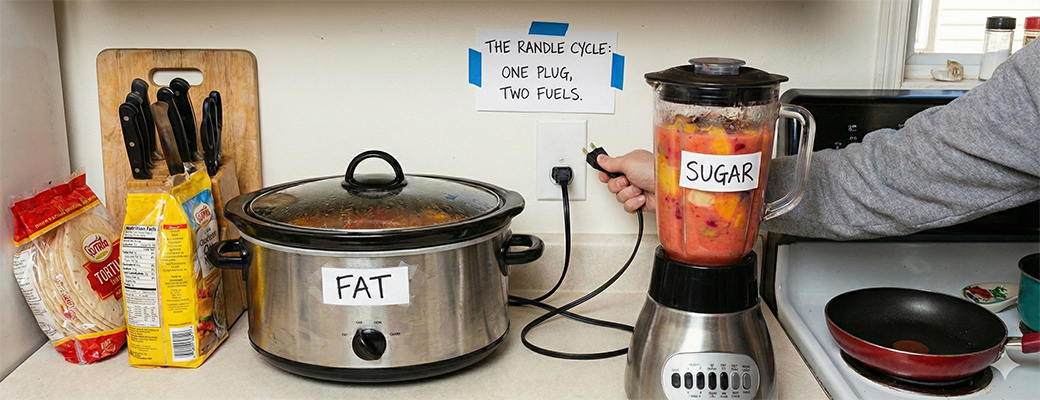
I want to talk about something that confused me for a long time.
I used to eat what looked like “healthy” meals on paper and still feel stuck. The scale didn’t move much, my energy felt unpredictable, and it never made sense why.
What I eventually learned is that sometimes it’s not what you’re eating — it’s how your body is trying to use it.
The Simple Version
Your body is very good at using fuel.
It just prefers a little clarity.
There’s a process inside the body that helps decide whether to use carbs or fat for energy. When both show up at the same time in large amounts, things can feel a bit sluggish or inefficient.
This isn’t about doing anything “wrong.”
It’s just about understanding how your body works.
When fuel signals are mixed constantly, your energy systems have to work harder. Over time, that can feel like heaviness, inconsistent energy, or progress that stalls even when you’re trying. Because they let your mitochondria breathe.
What Helped Me
Instead of overhauling everything, I started paying attention to simplifying meals when I could.
Not perfectly.
Not all the time.
Just enough to give my body a clearer signal.
That meant things like:
Choosing cream or sugar in my coffee, not both
Pairing protein and fat without adding extra starch
Enjoying carb-based meals without layering on a lot of added fat
These weren’t rules.
They were small choices that reduced friction.
And when my energy systems didn’t feel so overwhelmed, everything else became easier to support.
Why This Matters For Mitochondria
When your body isn’t constantly trying to juggle competing fuel sources, your mitochondria don’t have to work as hard just to keep up.
For me, this felt like:
steadier energy
less of that “puffy” or heavy feeling
fewer moments of feeling totally drained
It wasn’t dramatic.
It was noticeable.
And that’s exactly the kind of change that compounds.
Why Supplement Support Helps
Life isn’t perfect. Meals aren’t always simple.
That’s where support matters.
Using a mitochondrial support supplement like Mitolyn helped my body handle those “real life” moments better. It didn’t make choices for me — it helped my energy systems be more resilient when things weren’t ideal.
That flexibility is what allowed me to stay consistent without feeling rigid.
The Takeaway
This isn’t about cutting out foods or picking a forever diet.
It’s about understanding when your body does better with less competition and more clarity.
Once I stopped fighting my biology and started working with it, everything felt more supportive — which made it easier for my body to build energy capacity over time.
That leads naturally into the next layer of support, which is where things get even more interesting.
Mitochondria Booster #3: Gentle Resistance
(Building energy capacity over time)

One of the things that helped me reframe movement was realizing how closely it’s tied to energy.
Your muscles are one of the places where your mitochondria live. When you support muscle, you’re also supporting your body’s ability to produce and use energy.
But here’s something important.
If you’re not feeling motivated to work out right now, that’s okay.
I don’t believe in forcing movement when energy is already low. In fact, I’ve learned that pushing through when your system feels depleted often backfires.
That’s why I focus on the first two boosters first. When energy is supported through nutrition and supplementation, movement starts to feel different.
When Energy Comes Back, Movement Flows
What I noticed over time was this:
when my energy steadied, I wanted to move.
Not in a “I should work out” way — but in a natural, restless way. Sitting too long started to feel uncomfortable. Movement felt supportive instead of draining.
That’s when gentle resistance work started to make sense.
How I Approach Resistance Training
This doesn’t require a gym, heavy weights, or long workouts.
I use short, rhythmic resistance flows — often just 10 minutes — to gently challenge my muscles and remind my body that strength still matters.
Resistance bands, light weights, or bodyweight are more than enough.
The goal isn’t to exhaust yourself.
It’s to send a clear signal: we’re building capacity.
Over time, this helps your body create more energy-producing potential, which supports everything else you’re doing.
One Thing At A Time
You’re not behind if this isn’t your focus yet.
Support energy first.
Let consistency build.
Add resistance when it feels supportive, not forced.
This is about layering habits in a way that fits real life — not asking everything from yourself all at once.
Mitochondria Booster #4: The Post-Meal Walk
(One of the easiest ways I support energy)

If you’re ready to move a little but resistance workouts still feel like too much, this is a great place to start.
A short walk after a meal has been one of the simplest ways I’ve supported my energy — especially on days when motivation is low.
No sweating
No special clothes
No mental push
Just an easy walk. Sometimes with music. Sometimes with a podcast. Sometimes just moving and breathing.
Why This Helps
After you eat, your body has a lot of fuel moving through your system.
A gentle walk gives your muscles a chance to use some of that fuel right away. That takes pressure off your energy systems and helps things feel smoother instead of heavy.
For me, this showed up as:
fewer energy dips after meals
less sluggishness
a lighter, more settled feeling overall
It’s a small habit, but it’s surprisingly supportive.
How I Use This in Real Life
I don’t aim for perfection here.
If I can walk for 5–10 minutes after my biggest meal, I do.
If I can’t, I let it go and come back to it later.
More time is fine, but not required.
This habit works because it’s easy to repeat, even on busy days.
A Simple Tip
When it fits, I try to take these walks earlier in the day — after breakfast or lunch.
That way I naturally pair movement with daylight, which supports energy even more. If that doesn’t work for your schedule, it’s still helpful whenever you can fit it in.
The Bigger Picture
This walk isn’t about burning calories.
It’s about helping your body use energy more comfortably and reducing the feeling that everything takes effort.
For a lot of women, this is one of the most approachable places to start — and a habit that tends to stick.
And that naturally leads into the next layer of support, which has to do with light and timing.
Mitochondria Booster #5: Natural Light
(Helping my body find its rhythm again)

This is one of the simplest habits on the list — and one of the easiest to overlook.
Spending a few minutes in natural light, especially earlier in the day, has been a surprisingly helpful way for me to support my energy.
Light acts like a timing signal for your body. It helps your energy systems understand when to be alert and when to wind down, which makes the whole day feel more balanced.
This isn’t about sunbathing or doing anything extreme.
Just a little real light, consistently.
What This Looks Like in Real Life
I don’t overthink this.
Sometimes it’s:
Step outside while I'm drinking my morning coffee
Sitting near a window where the light actually reaches me
Work from outside for a few minutes when I can
Even 3–10 minutes makes a difference.
The key is that it doesn’t require extra time or effort. It just fits into what I’m already doing.
Why Pairing Light With Movement Helps
One thing I’ve found especially supportive is combining natural light with a short walk, usually earlier in the day.
That combination gently reinforces your body’s sense of timing and helps energy feel steadier instead of spiky.
When light and movement work together, I notice:
smoother energy through the afternoon
less of that wired-but-tired feeling
an easier time winding down later
It’s subtle, but it adds up.
Keep This Simple
You don’t need perfect conditions or sunny weather for this to help.
If you get light, great.
If you miss it, that’s okay too.
This habit works because it’s gentle and repeatable — not because it’s optimized.
And when your energy systems feel more supported, everything else you’re doing becomes easier to sustain.
As we’ve been talking about, some boosters feel very approachable.
The next one can feel more challenging — especially in busy seasons — so we’ll take it slowly.
Mitochondria Booster #6: Gentle Fasting
(Learning to trust stored energy again)

This one can bring up a lot of feelings, so I want to approach it carefully.
When people hear the word fasting, they often imagine extremes — long stretches without food, white-knuckling hunger, or doing something that feels stressful instead of supportive.
That’s not what I’m talking about here.
For me, fasting became helpful only after my energy felt steadier. And even then, it started very small.
What This Looked Like for Me
I didn’t jump into anything intense.
I started by:
skipping a snack I didn’t really need
stopping eating a little earlier in the evening
gently pushing breakfast back when it felt natural
That alone created a longer overnight break from food — nothing dramatic.
What surprised me was how different it felt once my energy systems were better supported. Hunger felt calmer. There was less urgency around eating. I didn’t feel panicky or depleted.
That was my signal that my body was learning to tap into stored energy more comfortably.
Why This Can Be Supportive (When the Timing Is Right)
When the body isn’t constantly processing incoming food, it has a chance to shift into repair and cleanup mode. You’ll sometimes hear this referred to as autophagy — essentially cellular maintenance.
This isn’t something you have to force.
In my experience, it becomes accessible only when:
energy crashes have settled
inflammation feels lower
stress isn’t running the show
That’s why I see fasting as a later-layer support, not a starting point.
A Very Important Note
Long or extended fasts are not necessary for most people, and they’re not something I recommend rushing into.
If fasting ever feels stressful, destabilizing, or triggering, that’s a sign to pause. Supporting energy should feel grounding, not overwhelming.
This is about listening, not pushing.
Where Support Makes a Difference
One reason fasting felt more approachable for me was because my energy systems were already supported.
Supplementation and simpler meals helped reduce the strain on my body, which made short fasting windows feel calmer instead of dramatic.
That support is what allowed me to experiment gently — without fear.
The Takeaway
Fasting isn’t a requirement.
It’s an option — one that can be helpful when the body is ready, and unnecessary when it’s not.
If all you ever do is build in a longer overnight break from food, that’s already meaningful.
The goal isn’t deprivation.
It’s trust.
And when energy systems are supported, that trust tends to grow naturally.
That brings us to the final booster — the one that ties everything together and helps make these changes stick long-term.
Mitochondria Booster #7: Deep Sleep
(Where everything starts to settle)

As your energy systems become more supported, something subtle but meaningful begins to happen.
Your body remembers how to rest.
Many of us assume sleep is fine as long as we fall asleep and wake up. But when the body is under constant strain, sleep often becomes shallow — more like unconsciousness than restoration.
What I noticed was that as inflammation eased and my energy steadied, sleep started to feel different. Deeper. Quieter. More complete.
Not because I forced it — but because my body finally felt safe enough to let go.
Why Deep Sleep Matters
Deep sleep is when the body does its quiet repair work.
This is the phase where:
energy systems reset
tissues recover
the brain clears out the mental “noise” of the day
It’s not something you can demand from your body.
In my experience, it showed up naturally after the earlier boosters were in place — better energy support, simpler meals, gentle movement, light, and rhythm.
Sleep became the result, not the task.
What This Feels Like Over Time
This didn’t happen all at once.
It showed up gradually as:
an easier transition into the evening
fewer racing thoughts at bedtime
muscles letting go more quickly
deeper, steadier breathing
And in the mornings, I noticed:
calmer energy instead of urgency
clearer thinking
less stiffness
a sense that my body had actually recovered overnight
Nothing dramatic — just a quiet sense of “things are working again.”
A Gentle Reminder
Deep sleep isn’t something you do.
It’s something you receive when your body feels supported enough to enter it.
If sleep feels elusive right now, that doesn’t mean you’re failing. It often just means earlier layers need a bit more time.
Start with the easiest supports.
Let consistency build.
Trust that rest follows rhythm.
When sleep starts showing up more reliably, it’s a sign that the system you’re building is working.
And that’s the perfect place to zoom out and talk about how all of this fits together in real life.
Don’t Do Everything at Once — Start Where It Feels Easy

Don’t Do Everything at Once — Start Where It Feels Easy
Before we go any further, I want to pause here for a moment.
You don’t need to apply all seven boosters right away.
And you definitely don’t need to “do this perfectly” to benefit.
One of the biggest shifts for me was realizing how little it actually takes to help my body start responding again.
A Simple Place to Begin
If supporting your energy — and eventually seeing changes in how your body feels — sounds appealing, remember this:
You don’t need all seven boosters to start noticing a difference.
What matters most is supporting your mitochondria, even in small ways.
That’s why, when things feel busy or heavy, I come back to just three.
The “Easy Three” I Rely On
When I want to keep things simple, this is where I start:
Support first. I take Mitolyn to give my energy systems a steady foundation.
Simpler meals. I keep food choices less mixed and easier for my body to use.
Natural light. I spend a few minutes outside or near a window during the day.
That’s it.
No fasting.
No intense workouts.
No pressure to walk after every meal.
Just those three supports, repeated consistently.
What Tends to Happen Next
When energy systems feel less strained, other things start to show up naturally.
Sleep often feels deeper.
Movement feels more appealing.
Walks happen without forcing.
Gentle workouts feel doable again.
It’s not something you push toward — it’s something that unfolds as your body feels safer and more supported.
Keep This Gentle
If today is a low-energy day, let it be simple.
You’re not behind if you’re only doing one or two of these.
Consistency matters more than completeness.
Start with what feels doable.
Let your body respond in its own time.
One Last Thing Before We Wrap Up
Up to now, I’ve mentioned Mitolyn without going into much detail — on purpose.
If you’re curious about why I chose it, how it’s formulated, and how it fits into everything you’ve just read, I want to walk you through that next.
I’ll explain the thinking behind it, and then invite you to watch a short presentation that brings it all together.
If that feels helpful, let’s continue.
Why I Chose to Support My Energy with Mitolyn
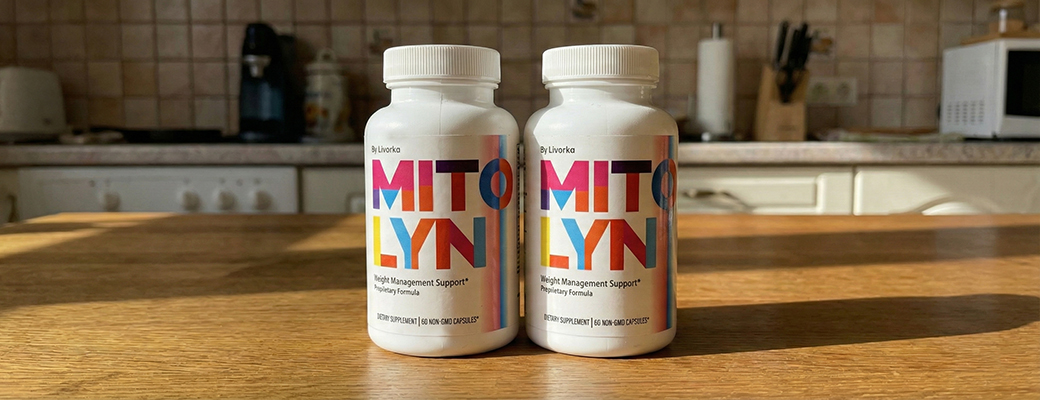
At the beginning of this page, we talked about the idea that fat loss isn’t just about eating less — it’s about how well your body can use energy.
That belief didn’t come from theory for me.
It came from experience.
When energy systems are strained, everything feels harder. Food requires more control. Consistency takes more effort. Progress feels fragile.
When energy is supported, the body responds differently.
That’s the lens through which I evaluate everything I use.
Why Mitolyn Fits This Approach
I didn’t choose Mitolyn because it promised fast results or dramatic change.
I chose it because it supports the same systems I’ve been talking about throughout this page — gently, consistently, and without pushing.
Its formula centers around a polyphenol-rich plant extract that helps support how cells handle incoming fuel. Instead of overstimulating energy, it focuses on efficiency and resilience.
Alongside that, it includes supportive compounds that help with:
cellular repair and recovery
managing oxidative stress
supporting the body during busy or low-sleep seasons
What mattered to me most was that it felt supportive, not aggressive.
How I Use It
I keep this simple.
I take two capsules a day, usually with a meal.
When it lines up, I pair it with simpler meals — not because I have to, but because it feels easier on my system.
That’s it.
No complicated timing.
No stacking pressure.
No sense that I need to “optimize” every detail.
One Important Thing I Want to Say
Mitolyn isn’t meant to replace habits or effort.
It’s meant to support the rhythm you’re building — especially during seasons when energy feels stretched.
That’s why I introduced it early, but explained it last.
It works best when it’s part of a bigger picture — not the whole picture.
If You Want to Go Deeper
I can only explain so much through words on a page.
If you’re curious about:
how Mitolyn is formulated
why these ingredients were chosen
and how it fits into a realistic, long-term approach
I invite you to watch the presentation that follows.
Take it at your own pace.
There’s no pressure to decide anything today.
Thank you for spending this time with me.
If this page gave you clarity, relief, or a sense that your body might not be working against you after all, then it’s done its job.
You’re always welcome to come back to this page whenever you need a reminder.
When you’re ready, you can continue here:
Some links on this page may be affiliate links, which means we may earn a commission at no additional cost to you.

Follow SLENDERMAMA:


About Us
SlenderMama helps busy moms get a noticeably flatter belly and tighter waist with 10-minute routines plus simple de-bloat habits. No crunch marathons. No diet chaos. Just a repeatable plan that works in real life.
Disclaimer:
Content on SlenderMama is for educational purposes only and does not constitute medical advice. Individual results may vary.
© Copyright 2026, SlenderMama. Privacy Policy. All Rights Reserved.